The plot to betray or kill Liberius
Doctor ZhivagoThe plot to betray or kill Liberius is a clandestine arrangement between disaffected partisans and representatives of the White enemy, aimed at handing over or killing their commander. Yurii Andreievich Zhivago overhears it by chance while concealed nearby. His discovery turns an act of political and personal betrayal into an ethical test: although Liberius is his captor and tormentor, he tries to prevent the conspiracy, only to learn that it has already been exposed through another channel.
Discovery in the camp
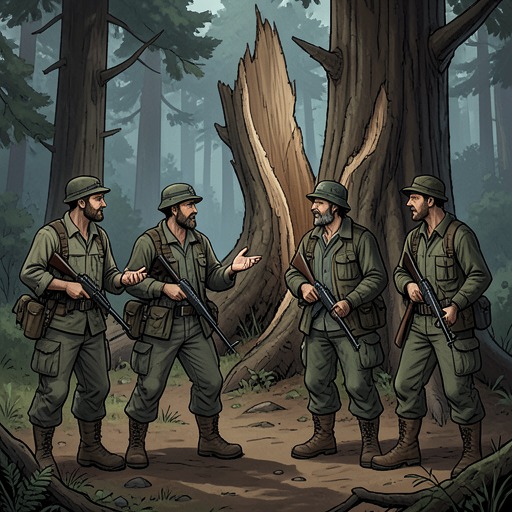
After briefly falling asleep, Yurii wakes to muffled voices discussing a secret plan. He remains still because the conspirators do not know he is present, and even a small movement could reveal him. The scene is therefore shaped by the limits of what he can hear: he catches fragments of the discussion, but the enemy delegates speak too quietly for him to make out their words.
Several voices belong to familiar camp followers whom Yurii regards as persistently involved in disorder: Goshka Riabikh, Sanka Pafnutkin, Koska Nekhvalenykh, and Terentii Galuzin. Zakhar Gorazdykh is also present. He has been implicated in illicit vodka production but is not then being prosecuted because he denounced the principal offenders. The most surprising participant to Yurii is Sivobluy, a partisan in the elite Silver Company and one of Liberius’s bodyguards, known within the camp as the commander’s trusted man. His apparent involvement suggests that the conspiracy reaches into the commander’s own immediate circle.
The proposed betrayal
The partisans are negotiating with delegates from the enemy’s forward positions. Zakhar dominates the conversation and presents the conspiracy as a way for the participants to secure pardon: in his account, they are trapped and must perform a service for the Whites. The plan is to deliver Liberius alive, as the enemy demands. Zakhar says that Galiullin is expected to arrive, though he mishears the name and calls him by another one; he treats the anticipated arrival as the conspirators’ opportunity.
Zakhar’s account also exposes the conflict inside the partisan camp. He derides Liberius as a hermit and objects to the commander’s strictures against cursing, drunkenness, and sexual misconduct, claiming that such rules make ordinary life impossible. The conspirators propose to lure Liberius to a ford that night, where they can fall upon him together and restrain him for transfer to the Whites. Zakhar adds that, if they cannot take him alive, he will kill him himself. The enemy’s participation is thus not merely an outside threat: its delegates are present to discuss the handover, while the camp conspirators are responsible for bringing their commander within reach.
Yurii’s response and the plot’s collapse
Yurii recognizes what the negotiations mean and is horrified. His reaction is complicated by the fact that he has often wished Liberius dead himself, after enduring captivity under him. Yet hearing a concrete plan to betray or kill the commander changes the question from private resentment to a choice about whether to intervene. Yurii decides to return to Kamennodvorsky, report the plot without naming anyone, and warn Liberius.
That intended warning cannot be delivered as planned: Kamennodvorsky has left, and only his assistant remains by the smoldering fire, watching to keep it from spreading. The conspiracy nevertheless fails. Its details are disclosed that day, and the plotters are seized before the planned attack can take place. Yurii learns that Sivobluy had acted as an agent provocateur. Rather than relieving his alarm, the revelation makes him feel more disgusted, leaving the episode to close on the exposure of a deception within a deception: the trusted bodyguard had appeared to join the plot while in fact serving as the means by which it was uncovered.
Significance within the partisan conflict
The scheme brings together two sources of danger: the White enemy’s attempt to obtain Liberius and the internal breakdown of discipline among some of the partisans. Zakhar’s complaint about the commander’s rules gives the betrayal a camp-specific motive, while his appeal to the participants’ desperate position presents treachery as a calculated bid for pardon. The proposed capture alive matters because it would deliver Liberius to the enemy; the fallback plan to kill him makes the conspirators’ intent unmistakable even if the handover fails.
Yurii’s response also complicates the simple division between captor and captive. His wish for Liberius’s death does not prevent him from recoiling when that death becomes the object of an organized plot. The episode makes his moral position visible through action rather than reconciliation: he tries to warn the commander without exposing names, while the actual prevention of the crime comes through the exposure of the conspirators and Sivobluy’s hidden role. The planned killing never occurs, but the episode records how precarious authority has become inside the partisan camp.